
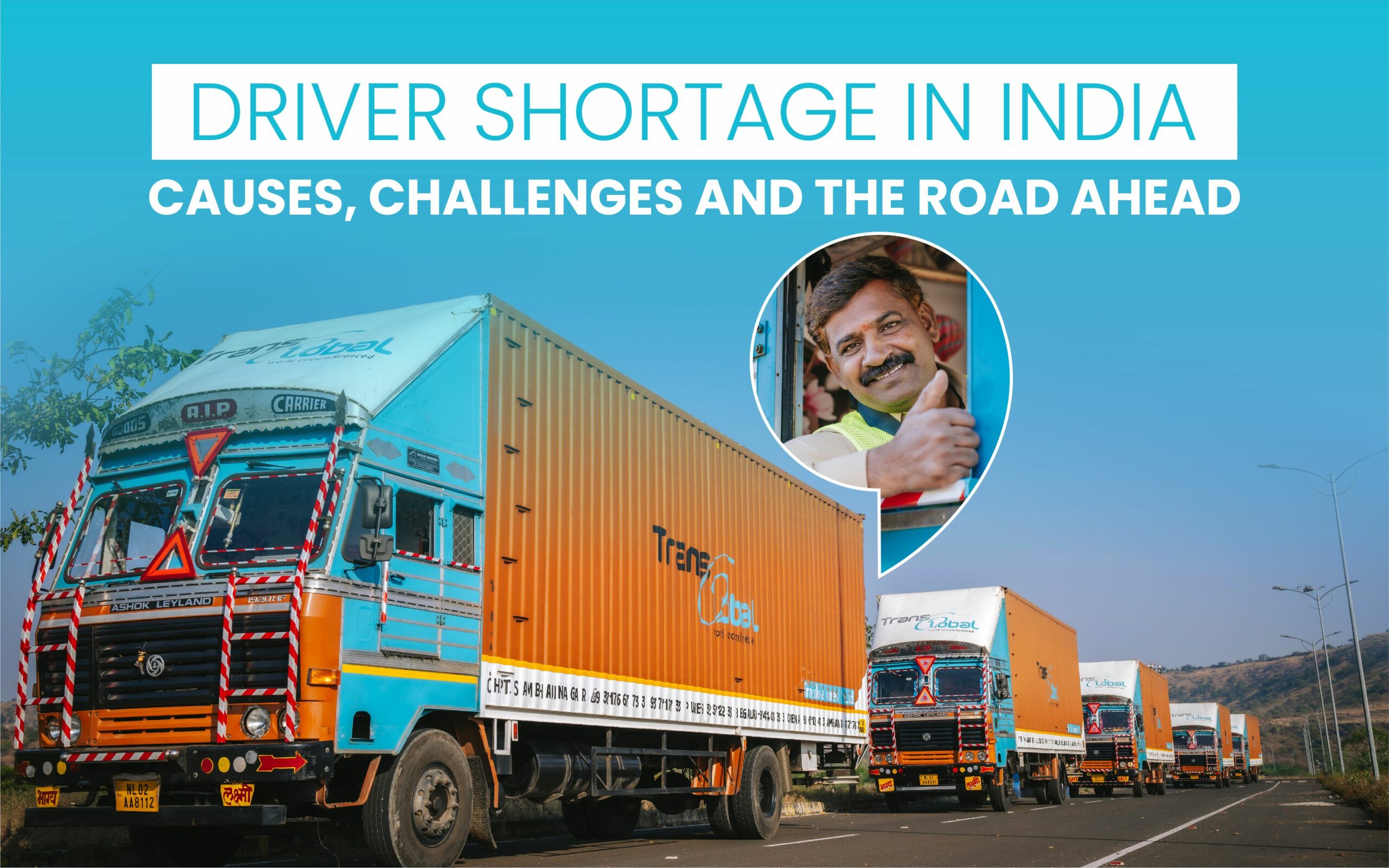
The Growing Driver Shortage in India’s Logistics Sector
India’s logistics industry is expanding at an unprecedented pace, powered by rapid e-commerce penetration, infrastructure development and manufacturing growth. However, beneath this growth story lies a persistent structural concern: the shortage of skilled commercial vehicle drivers.
A joint report by the Transport Corporation of India (TCI) and IIM Calcutta estimates that India currently faces a shortage of nearly 20–25% of truck drivers – approximately 600,000 drivers nationwide. NITI Aayog has also identified workforce gaps as a major constraint affecting freight mobility and supply chain efficiency.
As freight volumes continue to rise, this shortage directly impacts turnaround times, delivery reliability and operating costs. What once appeared cyclical has now evolved into a systemic workforce challenge.
Why the Gap Continues to Widen
Driver attrition is not driven by a single factor. It stems from a combination of demanding work conditions and limited long-term security.
Commercial driving often involves:
- Long and unpredictable working hours
- Extended time away from families
- High exposure to road safety risks
- Limited access to structured medical and financial security
- Minimal career progression pathways
According to data from the Ministry of Road Transport and Highways (MoRTH), driver fatigue contributes to a significant proportion of commercial vehicle accidents each year. When long hours are combined with physical strain and inconsistent safeguards, the profession becomes increasingly difficult to sustain over time.
As a result, experienced drivers exit the system while younger workers hesitate to enter it. The shortage, therefore, becomes self-reinforcing.
Moving from Hiring Drives to Structural Reform
Addressing the shortage requires more than recruitment campaigns. It demands a shift in mindset – from filling vacancies to building sustainable employment models.
Long-term solutions must focus on:
- Standardised and transparent hiring processes
- Regular safety and skill development programs
- Predictable work schedules to reduce fatigue
- Access to insurance and medical coverage
- Infrastructure support such as hygienic rest zones and essential facilities
When drivers experience dignity, safety and predictability in their work environment, retention improves organically.
How TransGlobal Carriers Is Strengthening Driver Stability
At TransGlobal Carriers, driver welfare is integrated into operational strategy. The goal is not simply to attract drivers, but to create conditions where they can build stable and respected careers.
Creating Safer Working Conditions
Safety is treated as foundational rather than optional. The company has implemented:
- Structured driver safety programs
- DMS-enabled vehicles to monitor driving behaviour and safety metrics
- A no night driving policy to reduce fatigue-related risks
- Dedicated AMC-supported vehicles to ensure mechanical reliability
These measures help reduce risk exposure while improving consistency in daily operations.
Enhancing Financial Security and Predictability
Financial stability plays a central role in retention. TransGlobal supports its drivers through:
- Attractive trip payments with timely payouts
- ₹10 lakh accident insurance coverage
- Free medical check-ups and safety kits
- A 3-year performance-based motorcycle scheme
- Transparent SOP-driven processes for trip management
By combining steady earnings with risk protection, the company reduces the financial uncertainty that often drives attrition.
Supporting Families, Not Just Drivers
One of the most overlooked aspects of driver retention is family stability. A driver’s decision to remain in the profession is closely tied to whether their work improves the security and aspirations of their household.
TransGlobal extends its welfare philosophy beyond the highway through:
- Annual family gifts that recognise the role of household support
- A pilgrimage scheme for parents
- A structured scholarship policy for children
Among these initiatives, the Education Scholarship Program reflects a deeper commitment to generational progress.
Last year, 35 children of TransGlobal drivers were recognised and supported for their academic excellence, spanning students from Senior KG to Class 12. The program celebrated consistent effort, discipline and curiosity – qualities that shape long-term success.
For many driver families, education represents the most meaningful path to upward mobility. Supporting children through scholarships is not merely an incentive; it is an investment in long-term stability. It acknowledges the dedication of parents who work tirelessly to create better opportunities for their children and who view education as the foundation for lasting progress.
When families feel secure and supported, drivers are more confident in their profession. Trust deepens, loyalty strengthens and retention becomes a natural outcome rather than a forced strategy.
Building a More Resilient Logistics Ecosystem
India’s logistics sector cannot sustain its growth trajectory without addressing its workforce challenges with structural intent. Solving the driver shortage will require consistent investment in safety, welfare, skill development and family support systems.
Organizations that embed these principles into their operating model will be better positioned to manage attrition and maintain service reliability.
By prioritising safety, financial security and educational empowerment, TransGlobal Carriers is contributing to a more stable and future-ready logistics ecosystem – one that values not just operational efficiency, but the people and families who keep India’s supply chains moving.
 +91 866 966 3333